
What's the difference between a meniscus injury and an ACL tear?
- Dayna Culwell

- 3 minutes ago
- 4 min read
Torn Meniscus or Torn ACL. Which is worse?

Happy August 23rd! I hope you have managed to stay cool these days. We had a mild start to summer but it all caught up with us this August. This week I will attempt to answer a tricky question concerning knees. Knees are already tricky yet remarkable. The most common knee injuries involve the meniscus and the ACL. I tore my ACL in college during a dancing performance. My mom gave me 2 Valium afterwards for the pain. It didn't even touch the pain! Now, 40 years later, when I watch sports, my heart sinks anytime a player collapses and holds their knee with a pained expression on their face. I know their recovery road will be long and slow. And with age, all that cartilage and scar tissue create one very messy "band-aid". To this day, when we do yoga lying down, extending the knee to sky, I see my own knee wobble from left-to-right instead of behaving properly in its groove. Luckily, yoga and pilates have given me a much deeper connection to what's going on and how to mediate discomfort. Do you know what the difference is between these two structures in the knee. Are they both ligaments? Are they both cartilage? Do they do the same job? The answer to these 3 questions is "not exactly".

The Meniscus
The meniscus serves as a juicy cushion between the femur (the thigh bone) and the anterior tibialis (the shin). Images to consider include having a nice fluffy pillow between your knees instead of a cheap thin and crispy pillow. Without "cush", the two bones scrape together. Any movement you do with a meniscus injury may cause clicking, locking, swelling, and difficulty bending the knee. My sister has battled a torn meniscus, surgeries, physical therapy, and continued pain after the surgery. And yet, she's a total rock star as the lead in her own band, Debra Watson & the Smokin' Aces. Her primary exercises consist of swing dancing, swimming, and boogie boarding.
The Anterior Cruciate
The Anterior Cruciate or (ACL) is a stabilizer for the knee. It's like having guy wires to keep a worker safe when working on construction sites. Wikipedia defines guy wires as a tensioned cable designed to add stability to a free-standing structure. A sailboat, for example, uses guy wires to keep the mast upright on the boat. When an ACL is torn, you'll often hear a pop. I still remember hearing that "pop" when my ACL tore, and the evil pain that followed. Rapid swelling, difficulty pivoting, or buckling are all common symptoms that I have experienced.
In general, both are nasty injuries that affect millions of people every year. So, when is it necessary to do surgery and when should we opt for physical therapy or both? When I tore my ACL in 1987, surgery was not an option. The success rates were still way below 80%. To this day, I can still run, dance, and waterski, but tennis had to go. I've learned to celebrate painless movement and proceed with caution at any movement that "tweaks" the knee. Zumba and tennis are two sports that no longer work for me.
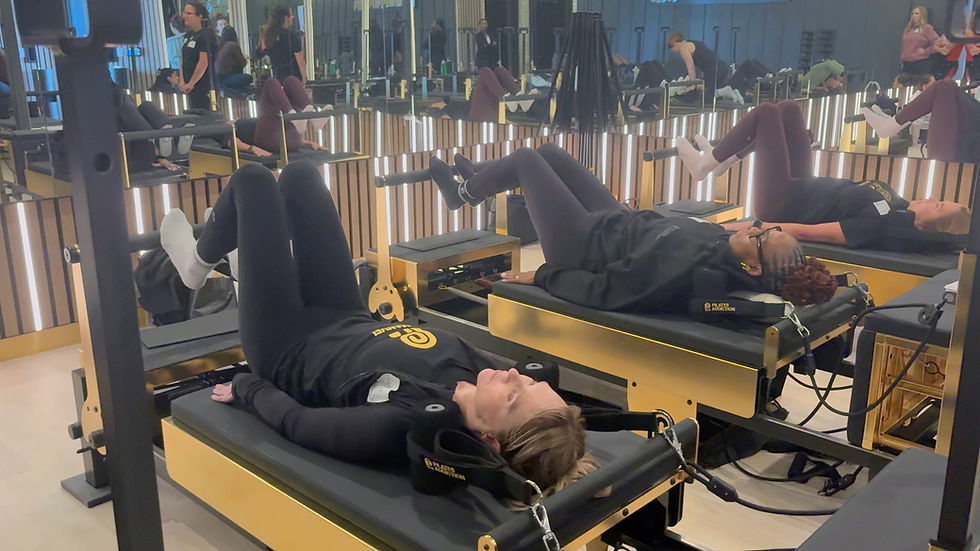
One step forward may equal two steps back if the motions are done without a deliberate slow and conscious movement. For this reason, slow yoga and pilates are my favorite go-to therapies for strengthening all of the muscles that provide knee support. We start with low to no load. We work with the joint to provide abundant blood flow and synovial fluid. We gradually add load to progress through strengthening, balance, and integrative movements. For example, I find that reverse lunges are safer than forward lunges. Using a pole to support your leg strengthening can add security and confidence to your recovery. Movements should be slow and small. This doesn't make the movements easier. Working fast often results in momentum. We are looking for lots of small movements, coupled with holds, and tiny repetitions.
Add Subheading
Taking a Pause
Having abundant friends and family is a gift that comes with a hefty responsibility. Sometimes, the heart breaks at the awesome challenge of "fixing" all that is broken. For example, we have a 3 year old in the family who is undergoing horrific chemo for Burkitt Lymphoma (a rare but very fast-growing type of non-Hodgkin lymphoma involving B lymphocytes. B lymphocytes are a type of white blood cell. This "demon" grows extremely rapid. Cells double in 24 hours. The upside is that it responds well to painful, intensive chemotherapy. This little guy, Hunt, is sweet, super active, and resilient, and needs compassionate empathy in every way. We are sending positive energy all the way to New Canaan, CT to his loving mom and dad, as well as the grandma, my sister-in-law and her husband.
We also are sending love and prayers to my step-daughter, who is a few days over do with her first baby--a little boy. We're not worried. Mom is in good health, but she is no doubt very, very big and uncomfortable. We want to meet this new love!
How are you breathing today?
More positive energy is being sent directly to my dear neighbor and friend who has recently been diagnosed with lung and brain cancer---And energy to a friend whose husband I sing with in our church choir. Cancer seems to be everywhere. It's the secret World War III. You or probably someone you know has been recently diagnosed. Finding peace in the midst of Cancer chaos challenges the best of us. Would you like more information on today's topic? Please reach out to me via this newsletter or yogabydayna@gmail.com.

What's Going on at Yoga by Dayna?
Monday, Aug 24
9 :15 am Judy & Andy
10:30 am Michael
11:45 am Deep Stretch (in studio & virtual)
6 pm Katie & Mike (Welcome!)
Tuesday, Aug 25
9 Christina
10:15 am Mat Pilates
11:30 open
2 Curt
Wednesday, Aug 26
9 Carol & Chris
10:30 am Jenny
12:15 Judy & Andy
Thursday, Aug 27
9 Christina
10:30 Judy & Andy
Friday, Aug 28
1 Ines
Thank you for reading my blog this week. May this week reveal something amazing within you. May your heart be open to exploration. Blessings and Namasté, Dayna
512-914-4870
Comments